


While acquiring new customers is important for any Shopify store, retaining the customers you already have can be far more cost-effective. In fact, acquiring a new customer can cost 5x more than retaining an existing one, and increasing retention by just 5% can boost profits by 25-95%.
But here’s the thing: successful Shopify brands don’t just rely on one retention tactic. They don’t just send more emails or launch a basic loyalty program and call it a day. Instead, they build a customer experience where different strategies work together - personalization, loyalty, email flows, post-purchase marketing, product strategy, customer service, and more all give customers another reason to come back.
So, what does that actually look like in practice? In this guide, we’ll break down the strategies successful Shopify brands use to boost customer retention rates and turn more buyers into repeat customers.
But first, let’s get the basics right - what customer retention actually means, which metrics matter most, and what you should really be focusing on.
What is Customer Retention?
Customer retention is a brand’s ability to encourage existing customers to keep buying from their business over time. For Shopify stores, it goes beyond simply getting someone to make a second purchase, it’s about building a relationship that increases purchase frequency, customer lifetime value (LTV), and brand preference.
What’s so valuable about customer retention is that once someone has purchased from you, you already have something valuable: customer data. You know what they bought, and potentially what they browsed, clicked on, or engaged with. That gives you the opportunity to make their next interaction more relevant instead of treating every customer the same.
Retention is built across the entire customer journey
Every interaction from your brand can influence whether a customer comes back. From the checkout and delivery experience to customer service, reviews, loyalty rewards, personalized recommendations, and post-purchase communication, there are plenty of opportunities to strengthen the relationship.
The key question you ask yourself needs to go beyond, “How do we get this customer to make another purchase?”, and angle more towards, “What would make a customer choose us again and again when there are hundreds of alternatives available?”
That shift in thinking is what turns retention from a single marketing tactic into a long-term Shopify growth strategy.
Why does customer retention matter?
Existing customers are already familiar with your brand, have experienced your product, and have demonstrated that they’re willing to spend money with you. That makes them a valuable audience to keep engaged.
In fact, existing customers spend approximately 67% more than new customers, while a store’s top 20% of most loyal customers can drive more than 50% of its revenue.
This is where Customer Lifetime Value (LTV) becomes particularly important. Customer LTV is the total revenue a business can expect to generate from a customer throughout their relationship with the brand.
So, throughout this guide, we’ll look at the retention mechanism behind each strategy - not just what the tactic is, but how it moves a customer toward another purchase and, ultimately, stronger customer LTV.
What is Returning Customer Rate?
Retention rate and returning customer rate are closely linked, but they measure slightly different things. It’s important to understand how these metrics compound each other to fully understand what the most successful retention strategies are.
Returning customer rate is the percentage of a Shopify store’s customers who have made more than one purchase during a specific period. It’s one of the more useful retention metrics because it shows how effectively a store is turning first-time buyers into repeat customers.
For example, if 1,000 customers purchased from your store during a given period and 250 of them had purchased from you before, your returning customer rate would be 25%.
What is a good returning visitor rate for Shopify stores?
According to Shopify, a returning visitor rate of around 30% is a good benchmark for many ecommerce stores. However, this can vary considerably by industry, with higher rates often seen among brands with strong loyalty programs, subscription models, or products that customers purchase regularly.
How to calculate returning customer rate
The basic formula is:
Returning Customer Rate = (Number of Returning Customers ÷ Total Number of Customers) × 100
So if your Shopify store had 1,000 customers in a given period and 300 had purchased before, your calculation would be:
(300 ÷ 1,000) × 100 = 30%
Your returning customer rate would therefore be 30%.
Tip: When tracking this metric, use a consistent time period - such as 30, 90, or 365 days - so you can compare performance over time and see whether your retention strategies are sustainable.
11 Strategies Successful Shopify Brands Use to Boost Customer Retention Rates
.webp)
1. Build a Loyalty Program That Rewards Repeat Behavior
The retention mechanism is: reward the second purchase → make the third purchase more likely → build a habit → increase customer LTV over time.
Loyalty programs are fundamentally about incentivizing customers to keep choosing your brand. Points, discounts, exclusive rewards, and member benefits give customers something tangible in return for their continued business, while the community element can make customers feel more connected to the brand.
Once customers have accumulated points, they then have something to lose by switching to a competitor. If they’re close to unlocking a truly valuable reward, that can be enough to influence where they make their next purchase.
In fact, 83% of consumers say a loyalty program makes them more likely to continue doing business with a brand.
Loyalty programs can also influence how much and how often customers buy. Tiered rewards, for example, can encourage customers to increase their basket size to reach the next level, while double-point events, anniversary rewards, or targeted offers can bring forward a purchase that may otherwise have happened later (or never at all!).
The data generated by a loyalty program is another benefit. It can show you who your most frequent and valuable customers are, what they buy, and how they respond to different rewards. This can then feed into more targeted retention campaigns and customer segments.
Loyalty programs become particularly valuable during Shopify Black Friday Cyber Monday, when customers are comparing offers from dozens of competing brands. If a customer already has points sitting in their account, they have an additional financial incentive to choose your store, particularly when competing discounts are similar.
And the benefit of this doesn’t have to end then Black Friday does. A customer who earns, for example, double points from their Black Friday purchase now has a reason to return and redeem them later, helping turn a major sales and acquisition period into future repeat purchases.
With loyalty programs shown to increase annual revenue by 15-25%, this is going to be a key strategy for seeing more sustainable Shopify growth.
.webp)
2. Use Personalization to Make Every Interaction More Relevant
The retention mechanism is: understand customer behavior → tailor the experience to their interests → reduce product discovery friction → increase engagement and purchase relevance → encourage repeat purchasing → strengthen customer LTV.
Personalization is one of the simplest ways for Shopify brands to make the shopping experience more useful to each customer. Rather than showing everyone the same products, promotions, and emails, use data from browsing behaviour and engagement to tailor what customers see and receive.
Over 70% of consumers expect personalization, so some simple but practical ways to incorporate it within your Shopify store include:
- Recommend relevant products: Use previous purchases to suggest products that genuinely fit the customer’s interests. Someone who buys a camera, for example, could be shown compatible lenses, batteries, or other accessories. This also creates much more effective cross-selling opportunities.
- Personalize email campaigns: Instead of sending every customer the same campaigns, tailor promotions based on what they’ve purchased or browsed. Also simple but intentional details like using a customer's name or sending a sign-up anniversary discount can make all the difference.
- Create useful customer segments: Group customers based on factors such as purchase frequency, product preferences, order value, or recency. This lets you adapt offers and messaging to where each customer is in their relationship with the brand.
- Make replenishment timely: If someone regularly purchases a product, use their previous buying pattern to send a reminder around the time they’re likely to need it again.
If customers repeatedly get useful recommendations and timely communication, your Shopify store becomes more likely to be their first choice when they need something in a specific product category.
3. Make Repeat Purchases Easier With a Shopify Mobile App & Push Notifications
The retention mechanism is: Download app → stay connected through push notifications → receive timely and relevant messages → make repeat purchases → build a habit → increase customer value over time.
Once you’ve got a customer to download your Shopify mobile app, your brand has a permanent place on their phone. It’s sitting on their homescreen, ready to be opened without the customer having to search for your website again. This way, you have a direct connection to customers who have chosen to install your app.
The app can also store customer details, preferences, loyalty points, and other information, while a fast, streamlined checkout removes friction from the next purchase. Here’s some more benefits:
- Deliver a better mobile experience: 79% of traffic to Shopify stores comes from mobile devices, so the mobile experience is a major part of the overall customer journey.
- Make repeat purchasing faster: Customers can open the app, browse relevant products, access their account, and checkout using saved details. The fewer steps between browsing and checkout, the easier it is for users to make repeat purchases.
- Use push notifications to drive action: Push notifications are one of the most powerful tools available for app-based retention. They appear directly on a customer’s phone, much like a text message, and can include images, product information, and a direct link into the app. A customer can tap the notification and immediately land on the relevant product or offer.
- Send personalized push notifications based on customer behavior: Use push for back-in-stock alerts, new product launches, replenishment reminders, personalized offers, abandoned cart reminders, and limited-time promotions. A customer who has shown interest in a particular product can receive a notification when it comes back in stock, rather than a generic promotion.
- Bring loyalty into the app: Creating an in-app loyalty program means customers can view their points, rewards, and member benefits directly from their phone.
- Reduce reliance on paid acquisition: Once a customer has downloaded the app and opted into push notifications, you have a direct way to reach them without paying Meta or Google to show them another ad.
Tip: The key when sending push notifications is relevance and restraint. Push notifications are powerful precisely because they are so visible, so sending too many generic messages can quickly lead to notifications being disabled, or the app being deleted. The strongest brands use the channel for messages that are genuinely useful, timely, or personalized.
After partnering with our team at StoreLab to build a dedicated mobile app for her Shopify store, Carol, founder of RockThoseCurves, saw a 3002% increase in online store sales, 100% increase in retention rate,126% increase in conversion rate, 48% increase in order value 👇
Would you like to see results like these for your Shopify store? Book a call with a member of our team at StoreLab.
4. Use Meta’s Retargeting Capabilities to Stay In Front of High-Intent Customers
The retention mechanism is: Customer shows intent → brand stays visible → customer returns → repeat purchase → customer becomes more valuable over time.
Retargeting with Meta ads works particularly well for retention because you’re advertising to people who’ve already shown interest in your brand. They may have visited your store, viewed a product, added something to their cart, or purchased from you before. Instead of starting from scratch with cold traffic, you’re staying visible to an audience that already knows the brand, which can deliver 3-5x higher conversion rates.
Someone might browse a product and leave simply because they weren’t ready to buy, got distracted, or want to compare alternatives. Retargeting gives you another opportunity to bring that customer back when they’re most likely to convert.
The real value comes from matching the ad to the customer’s behavior. Someone who viewed a specific product can be shown that product again, while an existing customer can be shown complementary products, new launches, or replenishment products.
Retargeting also helps turn one-off customers into repeat buyers. Once someone has purchased, you can continue using Meta to promote relevant products and bring them back to the store. This makes your original acquisition spend work harder - you’ve already paid to acquire the customer, so continuing the relationship can generate additional revenue without having to acquire them from scratch again.

5. Use Organic Social to Build an Ongoing Relationship With Customers
The retention mechanism is: Consistent content → ongoing engagement → stronger brand connection → increased brand recall and preference → more repeat purchases.
Organic social is valuable for retention because it keeps your Shopify store present between purchases. Customers aren’t always actively shopping, but regular content keeps your brand in their feed and makes it more likely they'll think of you when they’re ready to buy again.
The opportunity goes beyond posting product photos, meaning the goal isn’t to turn every post into a sales opportunity. Successful Shopify brands use organic social to build a relationship that isn’t entirely transactional. Educational content, entertainment, behind-the-scenes posts, customer stories, brand values, product launches, competitions, and UGC all give people reasons to follow and engage with your brand.
It can also strengthen brand preference. Consistent, distinctive content makes a brand more memorable, which can influence customers when they’re choosing between similar products. At the same time, reviews, UGC, and testimonial content provide ongoing social proof, reinforcing confidence in the brand and the customer’s decision to buy from you again.

6. Use Post-Purchase Marketing to Keep The Relationship Going After Checkout
The retention mechanism is: Purchase → positive post-purchase experience → relevant follow-up → repeat purchase → stronger customer value over time.
The customer experience doesn’t end at checkout. In fact, the period immediately after a purchase is one of the best opportunities to engage a customer because they’ve already committed to your brand and are likely excited about the product they’ve just bought. What’s more, 93% of consumers consider the post-purchase experience important.
Start with a simple thank-you follow up email. This can do much more than confirm the order; it can build trust, reinforce the customer’s decision, and even increase AOV.
Post-purchase communication should also be useful, not just promotional. How-to guides, tutorials, styling advice, or product education can help customers get more value from what they’ve purchased. A makeup brand, for example, could show a customer how to use the product they bought, then recommend complementary products that complete the routine or offer a relevant bundle.
There are several other opportunities to extend the relationship:
- Offer an incentive for the next purchase: A targeted offer can encourage customers to make another purchase rather than waiting until they naturally need something again.
- Introduce your loyalty program: Remind customers about the points they’ve earned and explain how they can use them, persuading them to engage with the program and work toward their next reward.
- Promote your Shopify mobile app: Give customers a reason to download the app, such as easier reordering, loyalty points, exclusive offers, or early access to new products.
- Check customer satisfaction: Follow up to make sure the order arrived safely and the customer is happy. Good support at this stage can prevent small issues from becoming reasons to not return to your store.
- Ask for reviews and UGC: Once they’ve received and used the product, ask for a review, photo, or video and offer a discount in return. This gives the customer an opportunity to engage with the brand while generating social proof for future shoppers.
- Build anticipation for new products: Give existing customers early access or exclusive previews of upcoming launches. Making customers feel like insiders can strengthen their connection to the brand.
The key is to use the post-purchase window to add value rather than immediately push another sale. When customers receive helpful content, thoughtful communication, and relevant recommendations after buying, the original transaction becomes the starting point for the next stage of the customer relationship.

7. Build Email Marketing Flows Around The Customer Lifecycle
The retention mechanism is: Customer enters a flow → receives timely and relevant communication → engages or purchases → enters the next relevant journey → repeat purchase → stronger customer LTV.
Your email marketing strategy doesn’t just start when someone makes a purchase - it starts well before that, with the first interaction a customer has with your brand. The goal is to build a series of automated touchpoints that develop trust, move customers toward purchase, and then continue the relationship afterwards.
This is where lifecycle email marketing becomes particularly powerful. Rather than sending the same campaign to your entire database, customers can enter different automated flows based on where they are in their relationship with the brand.
Segmentation is important here. For example, you can create specific customer segments for first-time buyers, repeat buyers, high spenders, and occasional buyers, then tailor the messaging and offers each group receives.
The post-purchase stage is where email can become particularly focused on driving the next purchase and building loyalty. A simple thank-you email could be followed by an offer such as 15% off their next purchase, or a time-sensitive incentive like “Order again within the next two weeks and earn double loyalty points.” For products with a natural replenishment cycle, you could promote a subscription with an incentive such as 25% off recurring orders.
Importantly, these shouldn't feel like disconnected promotional emails. Each flow should respond to what the customer has done and naturally lead into the next stage of their relationship with the brand.
A strong retention-focused email strategy can include welcome series, browse abandonment, abandoned cart, post-purchase, replenishment, cross-sell and upsell, product launch, VIP and loyalty, and win-back flows.

8. Build Retention Into Your Product Strategy
The retention mechanism is: Make repeat purchasing convenient → reduce the need to reconsider alternatives → increase purchase frequency → create a habitual or recurring relationship → stronger customer value over time.
Product strategy can be one of the most direct ways to improve retention because you’re building repeat purchasing into the way customers buy the product. Rather than relying entirely on marketing to convince someone to return, subscriptions and replenishment models make the next purchase part of the original buying decision.
For products customers naturally use up - such as makeup, vitamins, skincare, food, or household products - offer customers the option to receive the product or relevant bundle on a recurring basis. For example, a subscription could give customers 25% off every replenishment, making it a persuasive offer while also creating predictable, recurring revenue for the store.
Subscriptions also remove a key retention barrier: the customer doesn’t have to remember to reorder or reconsider where to buy it every time. Their product simply arrives when they need it. That convenience can make staying with your brand easier than searching for an alternative.
Bundles can work alongside this by combining products customers are likely to use together or repurchase at similar intervals. A skincare brand, for example, could offer a recurring bundle containing a cleanser, moisturizer, and serum rather than relying on the customer to purchase each product separately.
However, don’t assume that just because a customer has agreed to a subscription that you’ve retained them for good. Customers can still cancel if the experience becomes boring and repetitive or they find a better alternative. Keep customers sweet by occasionally adding a surprise free gift to their package.
The result is a retention model built around convenience, value, and routine: customers get what they need without having to think about their next order, while the store benefits from more predictable purchasing behavior and recurring revenue.
.webp)
9. Use Customer Service & Communication to Strengthen Retention
The retention mechanism is: Good communication → less friction and greater trust → better customer experience → higher satisfaction → increased likelihood of choosing the brand again.
Customer service is often overlooked as a retention strategy because it’s usually associated with solving problems rather than driving sales. But a great customer service experience can be one of the strongest reasons someone stays with your brand - especially if something does go wrong. In fact, 96% of consumers say customer service is an important factor for brand loyalty.
- Make customers feel looked after: Fast, helpful support can turn a typical purchase into a positive brand experience. When customers know they’ll be looked after and not messed around, they’re more likely to choose the same brand again.
- Communicate proactively: Don’t wait for customers to ask where their order is. Order confirmations, dispatch updates, delivery notifications, back-in-stock alerts, and return updates keep customers informed and happy throughout the journey.
- Reduce frustration at key moments: Delivery delays, refunds, returns, and product issues can quickly damage trust. Proactively explaining what’s happening can prevent a small issue from becoming a reason to leave.
- Turn problems into retention opportunities: A customer who experiences a problem isn’t necessarily a lost customer. Resolving the issue quickly, fairly, and perhaps offering a discount or gift card for their trouble can restore confidence.
- Make getting help easy: Live chat, email & social DMs, FAQs, and clear returns information reduce friction when customers need support or have questions before purchasing.
- Personalize customer communication: Referencing the customer’s specific order or previous interaction makes support feel more human and saves them from having to repeatedly explain their situation or hunt for order information.
The important thing is that communication shouldn’t only happen when something goes wrong. Consistent, proactive communication builds trust throughout the customer journey, making reliability and service part of the reason buyers become repeat customers.

10. Keep Building Trust With Reviews, UGC, and Social Proof
The retention mechanism is: Positive customer experience → reviews and UGC → stronger trust → lower perceived risk → greater brand confidence → repeat purchase and advocacy.
Reviews, user-generated content (UGC), and social proof do more than just help convince new customers to buy - they also reinforce the decision of existing customers to keep buying from you. When customers consistently see other people having positive experiences with your products, it strengthens their confidence that they’ve chosen the right brand.
As a whole, UGC also makes your Shopify store feel more authentic. Customer photos, videos, testimonials, before-and-after content, and creator content show how products actually look, work, or fit in real-world situations. What’s more, 82% of consumers report being more likely to purchase from a brand that includes UGC in its marketing efforts.
There’s also an opportunity to turn retention into advocacy, since 86% of loyal customers will recommend a brand to their friends and family. A happy customer who leaves a review, posts UGC, refers to a friend, or shares their experience is actively contributing to your brand’s growth.
There’s plenty of ways to generate and use social proof, including post-purchase review requests, UGC campaigns, customer spotlights, testimonials, influencer/creator content, giveaways, social reposts, product ratings, before-and-asfeter content, and incentives for reviews or referrals.
Over time, this creates a growing library of social proof that supports both retention and acquisition.

11. Recover High-Intent Shoppers With Abandoned Cart Reminders
The retention mechanism is: High purchase intent → cart abandonment → timely reminder → customer returns to checkout → purchase → opportunity for future retention.
Abandoned cart reminders are one of the simplest retention tactics because the customer was already so close to buying. They had found a product they wanted, added it to their cart, and started the checkout process. Often, they don’t need another sales pitch - they just need a small nudge to come back and finish what they started!
The reminder can also help address why they didn’t complete the purchase. Follow-up messages can reinforce product benefits, highlight reviews, answer common questions, or incentivise the purchase with things like free shipping. You can also create urgency by highlighting limited stock or an upcoming sale deadline.
Abandoned cart recovery can be delivered through email, SMS, and push notifications, with Meta retargeting working alongside these channels. Using these touchpoints can increase the chance of reaching the customer, but frequency should be controlled to avoid over-messaging.
It’s also important not to rely on discounts every time. If customers learn that abandoning their cart results in a discount, they may start doing it intentionally. Automated reminder triggers, urgency messaging, and then the occasional incentive - such as 20% off or free shipping if you buy in the next hour - work well at bringing shoppers back to complete their purchase.
Discover: What strategies do top online retailers use to lower abandoned cart rates?
What Are The Best Shopify Apps to Boost Customer Retention?
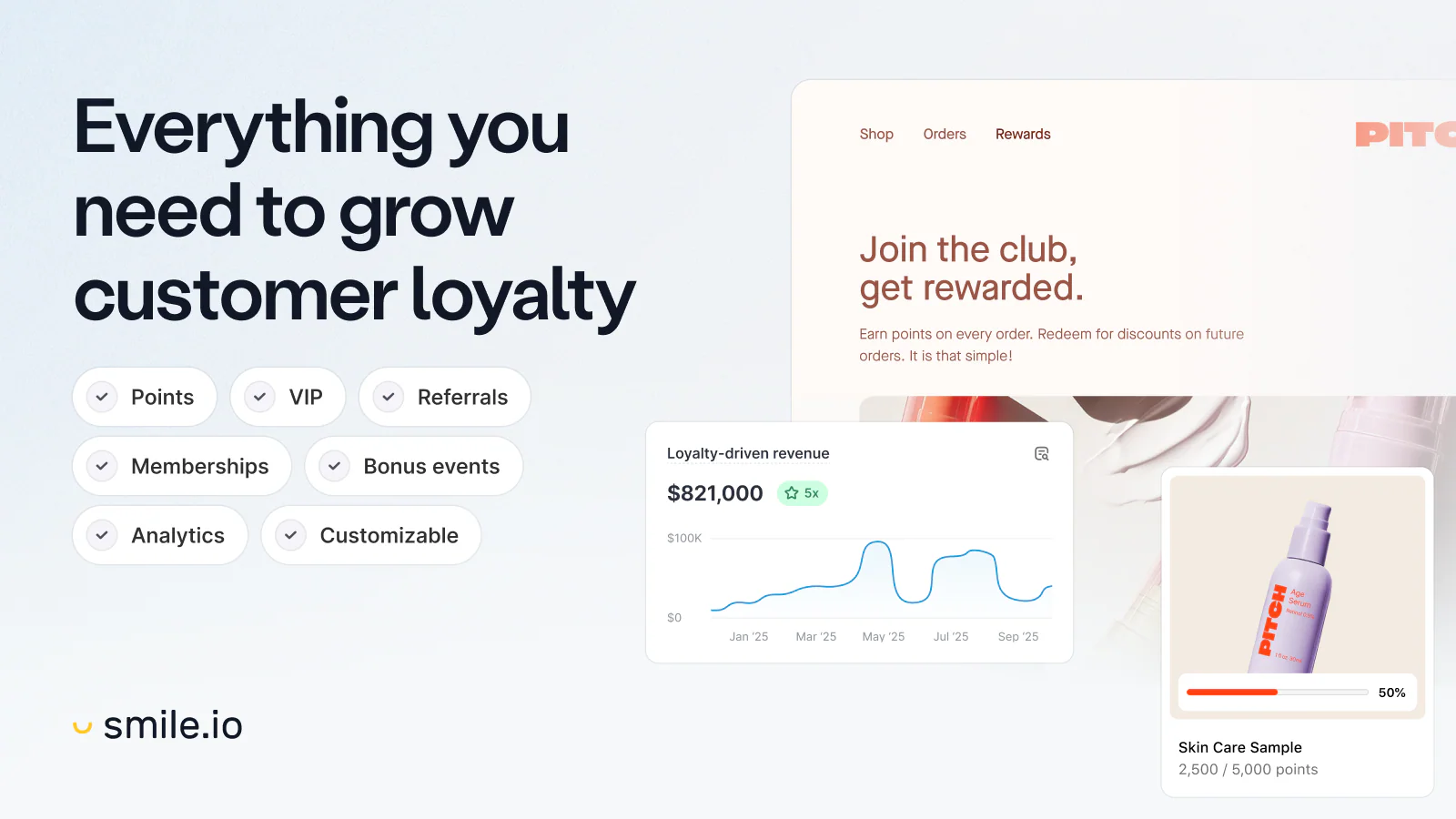
Smile: Loyalty Program Rewards
With Smile.io, you can launch a branded loyalty program using points, rewards, VIP tiers, and referrals. Customers can earn points from purchases and other actions, unlock exclusive perks, and receive incentives such as 2x points promotions or VIP pricing. Its integrations with tools such as Klaviyo also allow loyalty data to feed into broader retention campaigns.
.png)
Using Mailchimp, you can automate email and SMS marketing throughout the customer lifecycle, from welcome and abandoned cart messages to back-in-stock alerts, product recommendations, and win-back campaigns. Its Shopify integration allows customer data and events to be used for personalized segments, while automated discounts and SMS offers can help boost repeat purchases. For retention, Mailchimp is particularly useful for keeping customers engaged after their first purchase and triggering relevant, personalized communication based on their behavior.
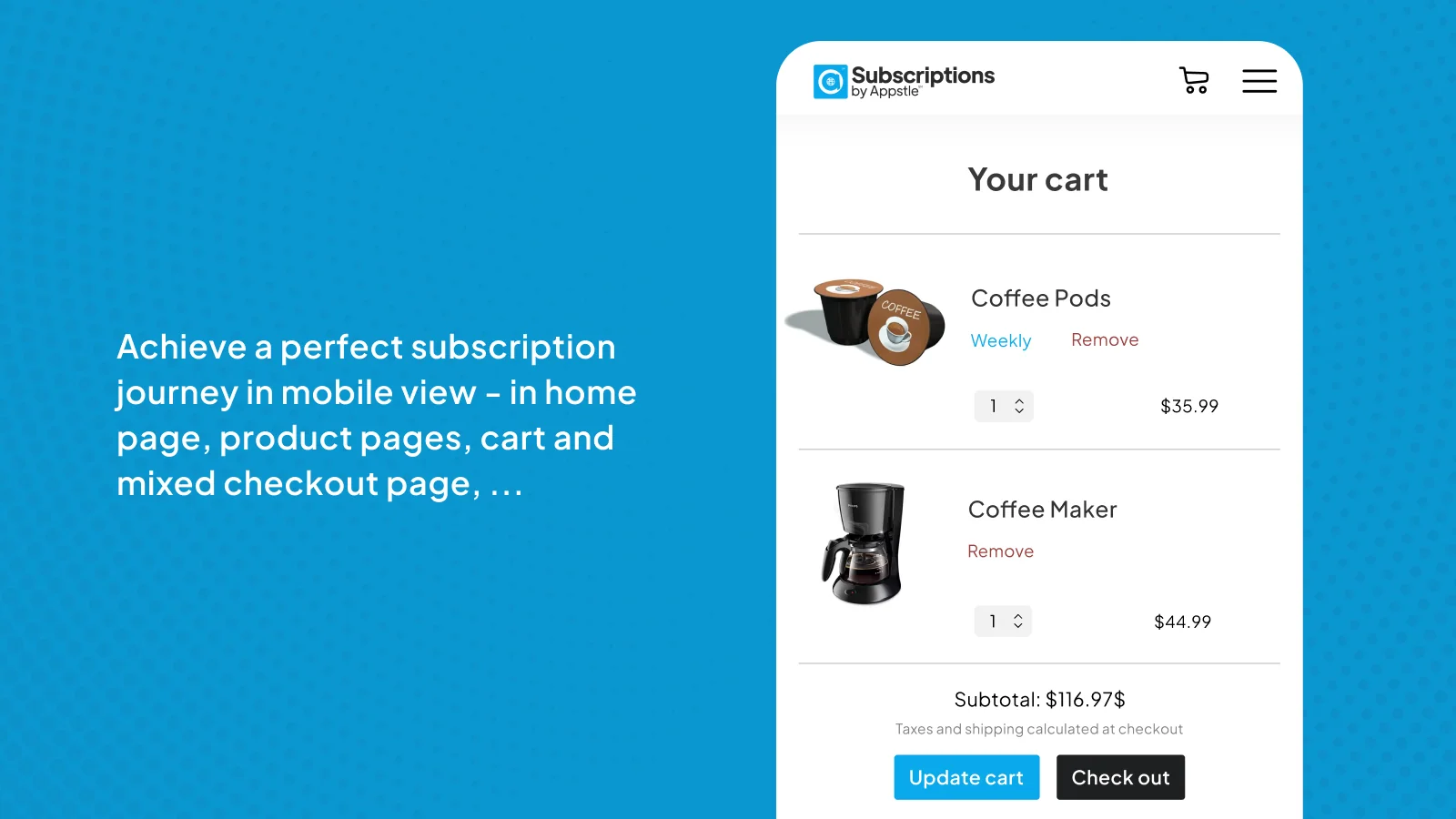
Appstle makes it easy to set up subscriptions for your Shopify store, with features including recurring orders, build-a-box, tiered discounts, gifts, custom shipping, and one-click checkout. Its retention tools also include churn management, upsells, bundling, and a customer portal where subscribers can manage their orders. By making repeat purchases automatic and adding incentives to stay subscribed, Appstle can help you nurture more consistent, recurring customer relationships.
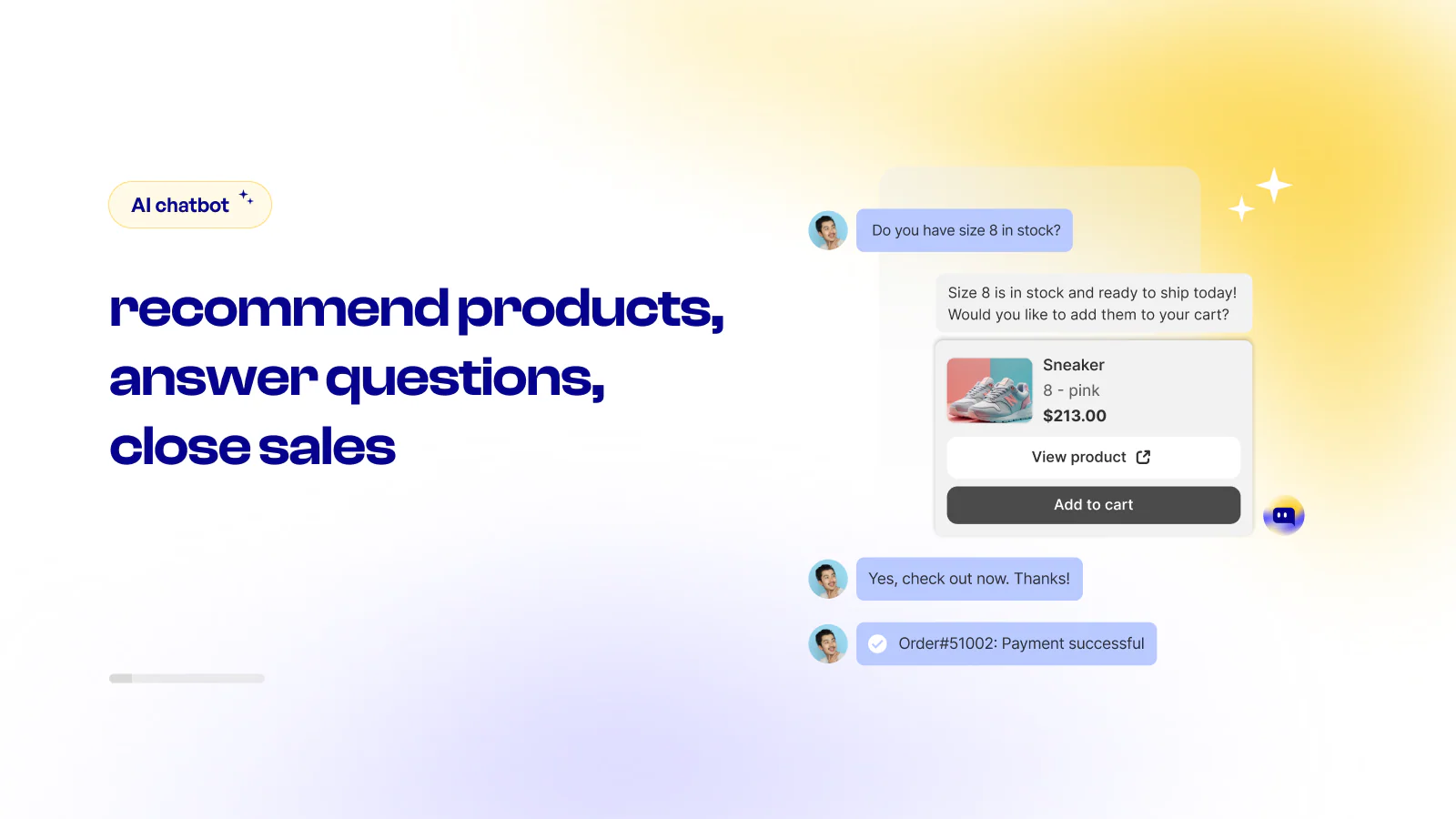
Chatty combines AI-powered customer support, live chat, and sales assistance in one platform. The chatbot can answer product questions, recommend products, help with order tracking, and provide 24/7 support, while the shared inbox brings conversations from channels such as WhatsApp, Facebook Messenger, Instagram, and email together. For retention, fast access to helpful support can reduce friction during and after a purchase, while proactive messages and personalized product recommendations create additional opportunities for customers to engage and buy again.
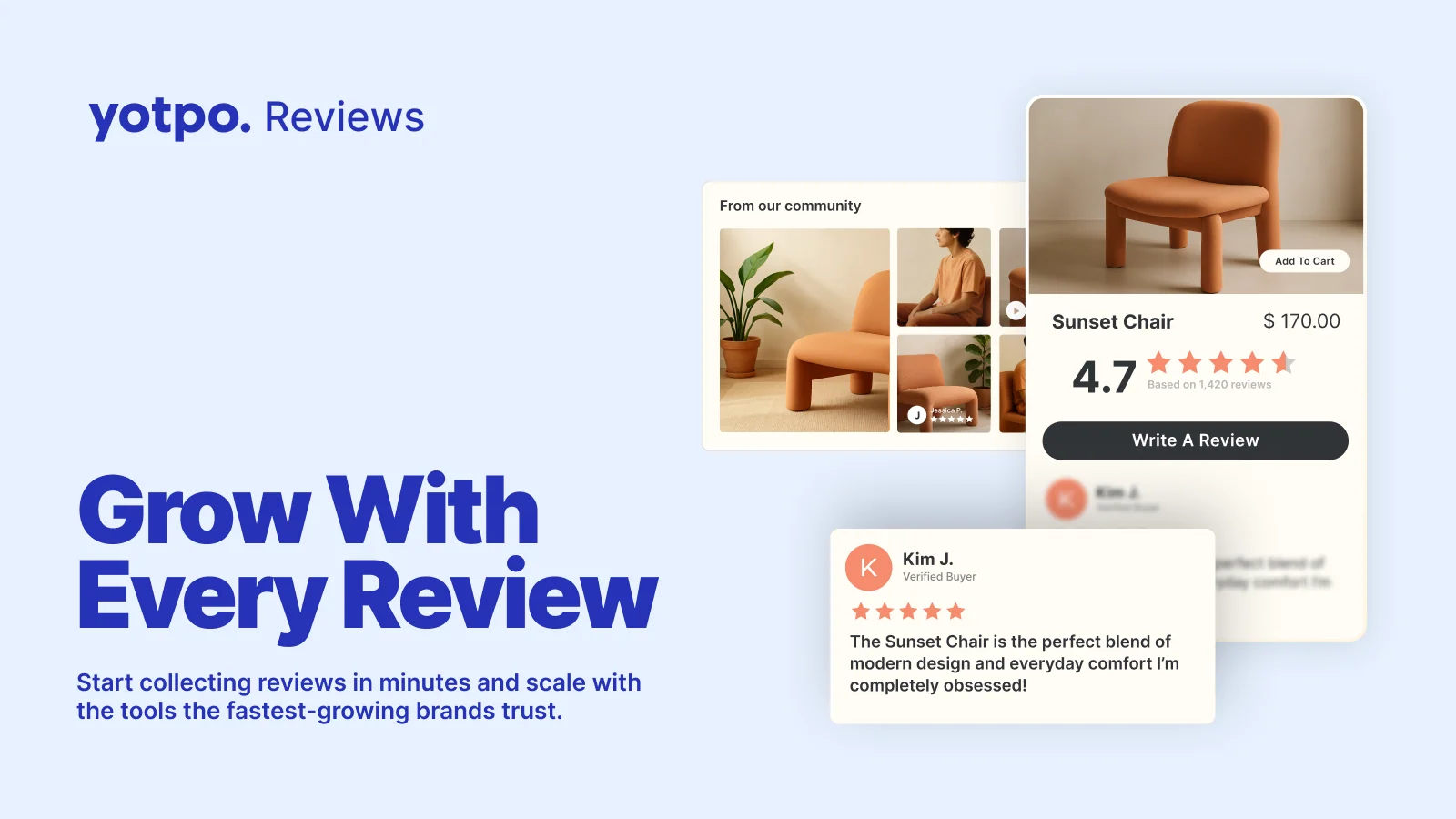
Yotpo focuses on collecting and displaying product reviews, ratings, photos, and videos to strengthen social proof throughout the customer journey. Automated review requests make it simple to gather feedback after purchase, while customizable widgets, AI summaries, and integrations can put that content in front of shoppers across your store, Google, and social channels. Consistently seeing positive experiences from other customers can reinforce confidence in the products they've bought and make trying another product from the same brand feel like a lower-risk decision.
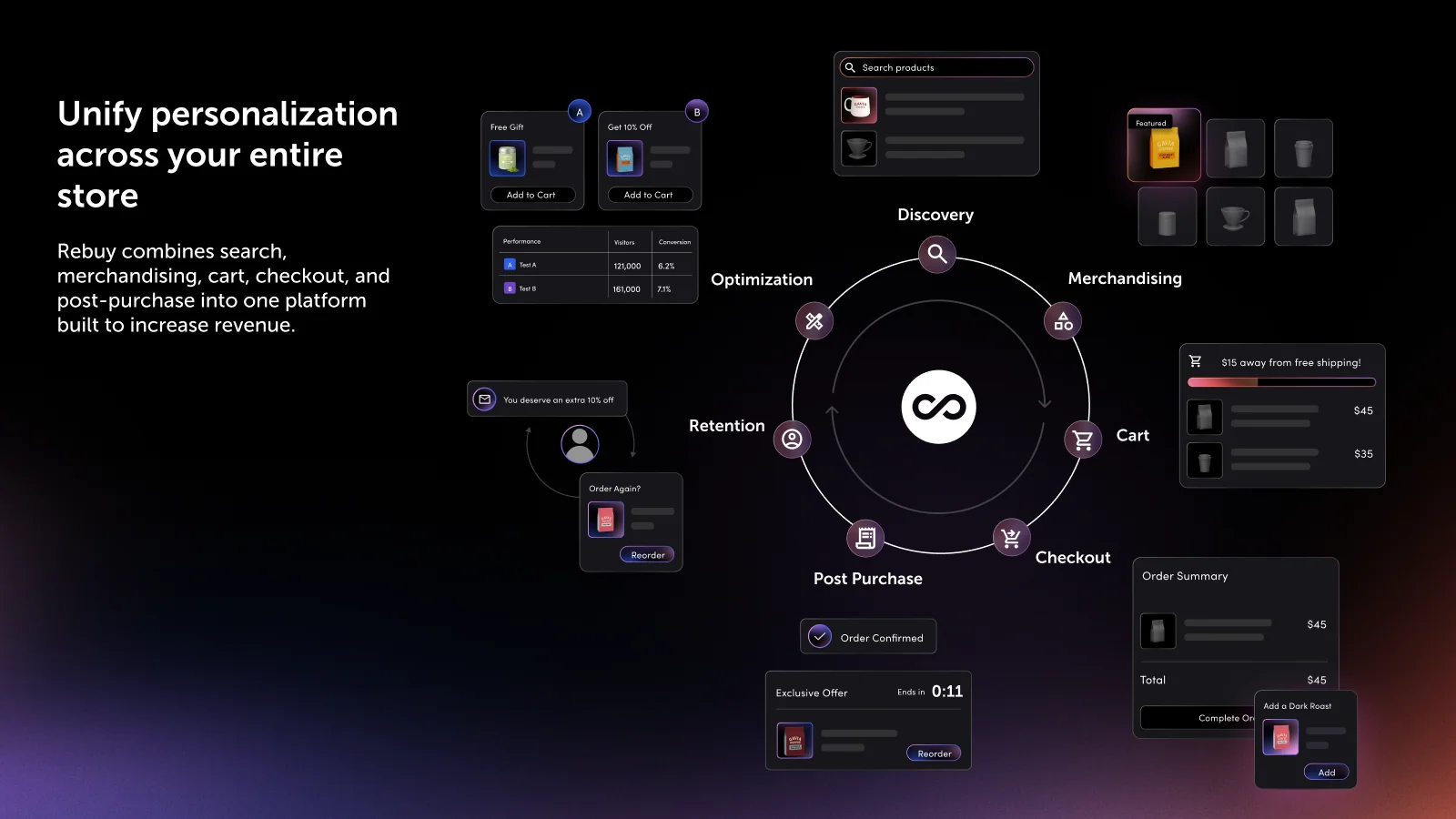
Rebuy uses AI to set rules around customer behavior and product data, determining which products or upsells to recommend at different stages, including the cart, checkout, and post-purchase.
Its tools include a customizable Smart Cart, personalized checkout recommendations, post-purchase offers, re-order pages, search, collections, and A/B testing. This can make subsequent shopping experiences more relevant by surfacing products that complement previous purchases or match customer interests.
Final Thoughts
We hope that learning about the strategies top Shopify brands use has shown you how retention can build a loyal customer base that generates recurring revenue, while reducing your reliance on constantly acquiring new customers.
Repeat customers don't just buy more often - they also tend to have a higher Average Order Value (AOV), which, alongside conversions, is one of the core metrics for Shopify growth. At StoreLab, we call this the CAR Framework.
The CAR Framework is designed to help Shopify stores grow by focusing on three core metrics:
- Conversion Rate: The percentage of visitors who actually make a purchase.
- Average Order Value (AOV): How much customers spend per order.
- Returning Customer Rate (Retention): How many customers come back to buy again.
These three metrics are deeply connected. Conversion Rate and AOV work closely together because if both are low, it becomes difficult to generate meaningful profit or scale paid advertising efficiently. Returning Customer Rate, meanwhile, is what drives long-term profitability by generating more revenue from customers you've already acquired.
When you improve all three together, you get a much clearer picture of your store's overall performance and growth potential.
That's why we've built our services specifically around improving these key metrics:
- Conversion Rate: CRO strategy, paid ads, creative, UGC, store design, landing pages, and UX optimization.
- Average Order Value (AOV): Bundling strategies, upsell and cross-sell logic, pricing strategies, offer architecture, and purchase optimization.
- Returning Customer Rate: Personalized mobile app builds, push notifications, and post-purchase email flows.
To learn more about how the CAR Framework works and how it could benefit your Shopify store, book a call with one of the Shopify growth experts at StoreLab.

Skyrocket your Shopify sales with a no-code Apple & Android mobile app. Available now on the Shopify app store.







.webp)

